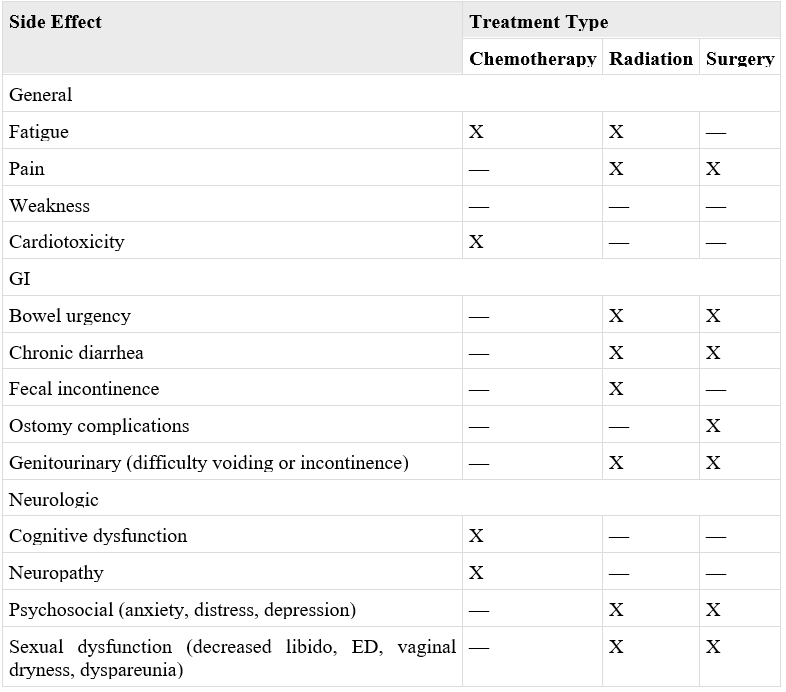
The most common treatment is surgical resection, with additional systemic chemotherapy and/or RT used either in the neoadjuvant or adjuvant setting for more advanced-stage CRC. Long-term and latent side effects for CRC survivors include bowel, bladder, or sexual dysfunction, complications related to an ostomy, peripheral neuropathy, and mental health issues (Gegechkori et al., 2017).
Bowel Dysfunction
Radiation therapy (RT) is linked to considerable bowel and anorectal side effects, such as bowel frequency, urgency, fecal incontinence, radiation proctitis, and perianal irritation. Approximately half of CRC survivors have chronic diarrhea, and RT remains an independent risk factor for long-term fecal incontinence. Patients who undergo lower anterior resection, as well as those undergoing sphincter-saving surgery, are also more likely to experience bowel dysfunction. Severe bowel dysfunction may also be associated with urinary dysfunction and negatively affects sexual function or satisfaction with sex life.
Bladder Dysfunction
Bladder dysfunction may present as various complaints. Damage to the sacral splanchnic nerves can cause detrusor denervation leading to decreased sensitivity of the bladder. Preoperative RT is also associated with increased risk of difficulty with urinary voiding. Primary symptoms are difficulties with bladder emptying, overflow incontinence, and loss of bladder fullness sensation. Long-term incontinence and/or difficulty in bladder emptying occur in approximately one-third of CRC survivors, although others have reported urinary urgency and urge- or stress-related incontinence in up to three-quarters of CRC survivors.
Sexual Dysfunction
Treatment-related sexual dysfunction has been reported in more than a third of CRC survivors. Sacral plexus damage that can occur with surgery, such as abdominal perineal resection, is associated with erectile dysfunction (ED) and painful intercourse. Sexual dysfunction is reported in up to two-thirds of CRC survivors and may be due to lack of libido, ED, or ejaculatory problems in men, vaginal dryness in women, and dyspareunia. Risk factors leading to sexual dysfunction include autonomic nerve damage, presence of a stoma, anastomotic leak, or preoperative radiation, the presence of a stoma, and perioperative blood loss.
Ostomy/Stoma-Related Complications
Approximately 10% of patients undergoing sphincter-saving resections have a temporary ileostomy. Complications associated with ostomies include peristomal skin irritation, leakage, odor, noise from the appliance, emotional and social distress. The presence of an ostomy may also impact CRC survivors’ relationships and sexual intimacy.
Neuropathy
Chemotherapy-induced peripheral neuropathy (CIPN) is a potential long-term effect of oxaliplatin, which is often used to treat advanced CRC. Some studies report that about 77% of cancer survivors experience oxaliplatin-induced grade 2 peripheral neuropathy. Mostly large sensory nerves are affected, leading to various types of paresthesias. Symptoms are partially reversible for most patients, although less than 40% recover completely.
Cognitive Dysfunction
Cognitive impairment has been found to range from 36% to 52% among CRC survivors. The main cognitive domains affecting CRC survivors include processing speed, verbal memory, and attention/working memory. Adjuvant chemotherapy may increase cognitive dysfunction in CRC survivors, although the majority will improve after treatment completion.
Other Treatment Effects
Up to a quarter of CRC survivors may experience chronic pain as a direct result of the cancer or treatment, thus dramatically influencing survivors’ recovery and rehabilitation. Radiotherapy may also increase fracture risk, particularly for pelvic fractures. Last, incidence of 5-fluorouracil–associated cardiotoxicity can occur in up to 68% of CRC survivors and may include angina-like chest pain, myocardial infarction, arrhythmias, heart failure, cardiogenic shock, and sudden death. A previous history of coronary artery disease and mediastinal radiotherapy is significantly associated with posttreatment cardiotoxicity
Managing Physical Side Effects
There are ways to help lessen or manage physical side effects. Some possibilities include: (NCI, 2024)
· Rest and sleep.
o Practice good sleep habits. It is common for people going through treatment for cancer to have changes in their sleep patterns or difficulty sleeping.
o Plan time to rest. If you are tired, take short naps of less than one hour during the day. Keep in mind that sleeping too much during the day can make it difficult to sleep well at night.
o Start with what’s most important. Choose activities that are most important to you and do them when you have the most energy. Limit activities that increase your fatigue.
· Exercise and physical activity. Exercise (including walking) may help people with cancer feel better and have more energy during and after treatment. Choose a physical activity you enjoy. Talk with your health care team or a physical therapist to make an exercise plan that’s right for you.
· Food and drink. Meet with a registered dietitian to learn about foods and drinks that have the nutrients you need to keep up your energy level. Many people find it easier to eat many small meals throughout the day than three big meals. Drink plenty of water and limit your intake of caffeine and alcohol.
Gegechkori, N., Haines, L., & Lin, J. J. (2017). Long term and latent side effects of specific cancer types. The Medical Clinics of North America, 101(6), 1053.
NCI, N. C. I. (2024, September 20, 2024). Cancer Fatigue. https://www.cancer.gov/about-cancer/treatment/side-effects/fatigue